Iran has begun one of the largest funeral ceremonies in its history: a multi-day farewell for Supreme Leader Ayatollah Ali Khamenei, who was killed on 28 February 2026 in a joint US-Israeli strike. The attack marked the opening of a broader war between Iran, the United States, and Israel, and also killed several members of Khamenei's family.
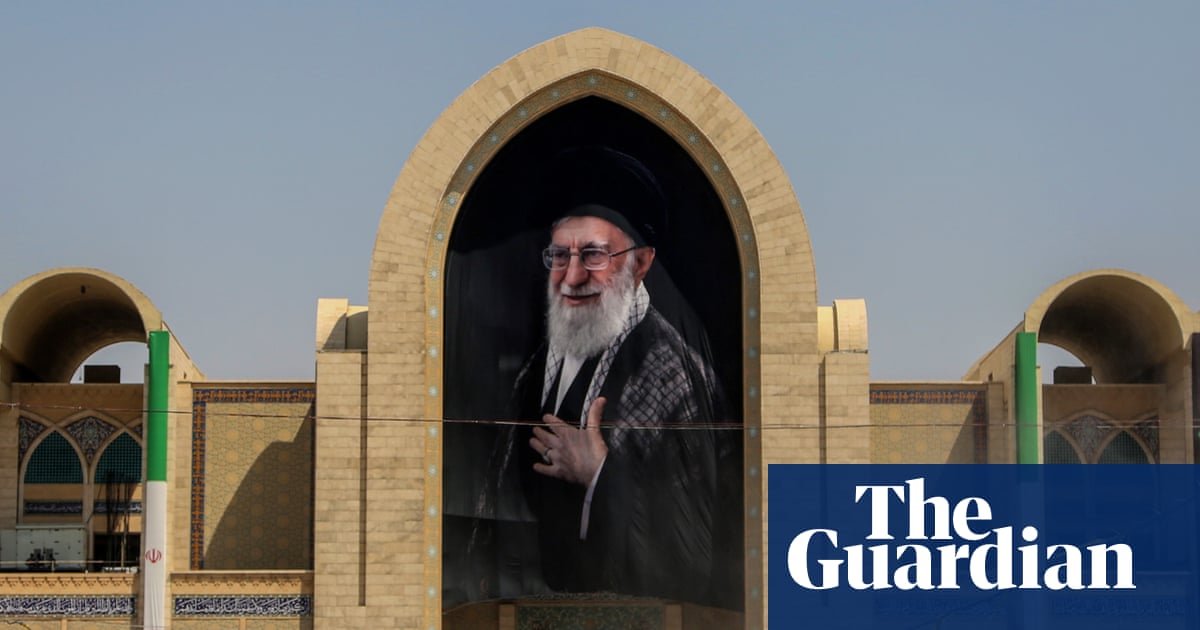
Khamenei had led the Islamic Republic for 36 years, serving as its central religious and political authority. His death left a significant vacuum of leadership in a country simultaneously at war with two powerful adversaries. The funeral, delayed for months, is now set to unfold over six to seven days, from July 3 to July 9, with stops in several cities across Iran and Iraq.
Khamenei's body was brought to Tehran's Grand Mosalla mosque on Friday, one of the most significant religious gathering sites in the Islamic Republic. From there, the coffin, draped in Iran's tricolour flag, was carried to further ceremonies, including a farewell rite at the Imam Khomeini Hussainiya in southern Tehran. According to Iranian state media, more than 20 million people are expected to attend — a figure that would more than double Tehran's population of roughly 10 million and could make it the largest funeral in the country's history.
The burial is ultimately set to take place at the Imam Reza shrine in Mashhad, Khamenei's birthplace in northeastern Iran. The choice of location underscores the religious symbolism of the ceremony, as the shrine is one of the most significant Shia pilgrimage sites in the world.
Internationally, numerous delegations traveled to attend. Pakistani Prime Minister Shehbaz Sharif departed for Iran with a high-level delegation, including National Assembly Speaker Ayaz Sadiq, Deputy Prime Minister and Foreign Minister Ishaq Dar, Information Minister Attaullah Tarar, and Pakistan Peoples Party chairman Bilawal Bhutto Zardari. The participation of such senior foreign officials signals the diplomatic weight some states place on the event, especially amid the tense regional situation.
Alongside the religious ceremonies, Iran's leadership issued pointed warnings to the United States and Israel. A senior negotiator called for a massive turnout to symbolically avenge Khamenei's death, while officials stated that any attack during the funeral proceedings would be met with harsh retaliation. These warnings illustrate that the ongoing war between Iran and its adversaries has not paused for the mourning period.
Another notable detail in the coverage concerns General Ahmad Vahidi, commander of the Islamic Revolutionary Guard Corps (IRGC). After weeks without public appearances — presumably for security reasons during the war — he resurfaced publicly in connection with the funeral preparations, including being seen seated beside Khamenei's casket.
What remains unclear from available reporting is who will succeed Khamenei as Supreme Leader and how the country's political leadership structure will stabilize following his death. It is also uncertain how the war with the United States and Israel will evolve during and after the funeral events. The coming days will show whether announced security measures are sufficient to carry out the mass gathering without further escalation, and what political signals can be drawn from the scale of international participation in the ceremony.
Fast take
Iran has begun one of the largest funeral ceremonies in its history: a multi-day farewell for Supreme Leader Ayatollah Ali Khamenei, who was killed on 28 February 2026 in a joint US-Israeli strike.
NOFRAME signal
Medium divergence · 16 Sources · 5 Regions
What remains open
Coverage is not fully split, but it is not identical either. That makes the comparison useful: the fact base shows the common core, while the perspectives show where political, regional, or institutional priorities change the emphasis.
Dossier compass
Which media spaces carry the story and how broad the source base is.
Source mix
Underlit angles
- Detailed international diplomatic reactions outside the region
- Extensive background on the war and the strikes
- Details on the religious ceremony and international delegations
Open originals
Go straight to the linked articles. NOFRAME does not replace those sources.
Why it matters
Coverage is not fully split, but it is not identical either. That makes the comparison useful: the fact base shows the common core, while the perspectives show where political, regional, or institutional priorities change the emphasis.
Timeline
The Independent · July 3, 2026 at 09:24 AM
Iran begins days-long funeral for Ayatollah Khamenei months after his death
The Independent · July 3, 2026 at 09:26 AM
Iran-US war latest: Tehran begins public mourning for Ayatollah Khamenei with funeral to draw 20 million to capital
Al-Monitor · July 3, 2026 at 09:30 AM
Supreme leader's body arrives at Tehran religious complex for funeral
Dawn · July 3, 2026 at 09:53 AM
PM Shehbaz departs for Iran to attend assassinated supreme leader Khamenei's funeral