Talks between the United States and Iran on implementing a recently signed peace agreement, which had been scheduled for Friday, June 19, have been postponed. Switzerland's foreign ministry announced the delay. The negotiations were to take place at the Bürgenstock resort above Lake Lucerne. US Vice President JD Vance, who was to lead the American delegation, cancelled his planned trip to Switzerland at short notice. A White House spokesperson cited unresolved logistical issues, saying the logistics of such negotiations had "never been simple or predictable." The postponement represents a significant setback for prospects of a lasting peace in the Middle East, with the consequences still unclear.
The planned talks stemmed from an agreement reached by the US and Iran after months of fighting. On June 15 and 16, both sides signed a document referred to as the "Islamabad Memorandum of Understanding," building on a 14-point framework agreement reached the preceding Monday. That framework provides for a 60-day negotiating window to resolve key disputes, including the reopening of the Strait of Hormuz, the easing of sanctions against Iran, the unfreezing of Iranian assets, and political and legal questions surrounding Iran's nuclear program. According to US officials, the agreement marked a decisive turning point in the preceding conflict. Mediators from Pakistan and Qatar were also expected to take part in the now-postponed talks in Switzerland.
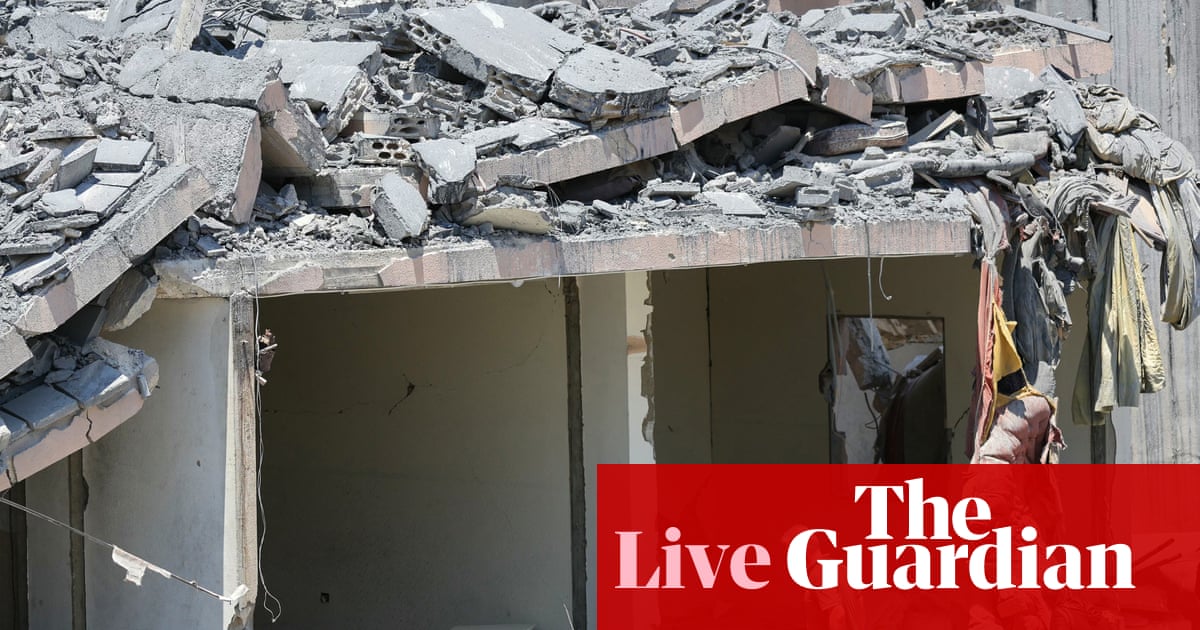
At the same time as the postponement was announced, violence in southern Lebanon escalated sharply. Israeli air strikes and clashes with Hezbollah killed at least 16 to 18 people, according to Lebanese officials, while British media reports also cited four Israeli soldiers killed in the fighting. The strikes occurred despite a ceasefire that was technically supposed to be in effect in Lebanon. According to the Israeli account, its forces were responding to repeated ceasefire violations by Hezbollah.
Several reports, particularly from Arab media outlets, suggest that the Iranian negotiating delegation deliberately delayed its departure for Switzerland because of the Israeli strikes in Lebanon. A report from the broadcaster Al Mayadeen, cited by outlets including Middle East Eye, describes this as a deliberate holding back by Tehran in light of the escalation. This account, however, has not been conclusively confirmed elsewhere; Western news agencies such as Reuters, whose reporting was widely republished, primarily cite the logistical problems named by the White House as the official reason for the postponement. Reports therefore differ on whether the delay was driven mainly by organizational issues or by the escalation in Lebanon.
Iran's chief negotiator, Mohammad Bagher Ghalibaf, reportedly warned that any breach of the agreement or excessive demands would be met with a strong response. This statement was prominently featured in South Asian and Arab media coverage, framed as a sign of the fragility of the agreement reached so far.
On the Western side, diplomats struck a more measured tone regarding the significance of the postponement. French Foreign Minister Jean-Noël Barrot cautioned against over-interpreting the delay. The hardest part still lies ahead, he told the broadcaster FranceInfo, as quoted by the Guardian, but the agreement has, after all, already been signed. At the same time, remarks attributed to US President Donald Trump drew attention, with reports quoting him as describing Iran's position as an "unconditional surrender" and stating there were "no limits" to his power. Such statements were discussed in Western media as a potential complicating factor for the already fragile negotiations.
Coverage from Russian outlets, including Sputnik and TASS, focused more heavily on technical and logistical aspects of the postponement as well as on substantive negotiating topics such as the nuclear program, sanctions, and frozen assets, without extensive discussion of the Lebanon escalation or casualty figures. Media in China and Singapore, such as the Straits Times, closely followed the Reuters wire report, sticking to the core facts of the postponement and Vance's cancelled trip without additional context or interpretation.
It remains unclear when the talks might be rescheduled. As of this report, Switzerland had not announced a new date. Representatives from several sides, including France, described the postponement as a temporary rather than a final setback. Nevertheless, the situation raises immediate questions about the overall stability of the agreement, particularly given the ongoing violence in Lebanon and the pointed warnings from Iranian officials. How the situation develops in the coming days, whether a new date for talks is set, and how the Lebanon escalation affects the 60-day negotiating process remain open questions.
Fast take
Talks between the United States and Iran on implementing a recently signed peace agreement, which had been scheduled for Friday, June 19, have been postponed.
NOFRAME signal
Medium divergence · 18 Sources · 5 Regions
What remains open
Coverage is not fully split, but it is not identical either. That makes the comparison useful: the fact base shows the common core, while the perspectives show where political, regional, or institutional priorities change the emphasis.
Dossier compass
Which media spaces carry the story and how broad the source base is.
Source mix
Underlit angles
- Detailed treatment of Trump's 'surrender' remark
- In-depth Western skepticism about the deal's durability
- Details on the Lebanon escalation and casualty figures
Open originals
Go straight to the linked articles. NOFRAME does not replace those sources.
Why it matters
Coverage is not fully split, but it is not identical either. That makes the comparison useful: the fact base shows the common core, while the perspectives show where political, regional, or institutional priorities change the emphasis.
Timeline
Straits Times · June 19, 2026 at 09:34 AM
US-Iran peace talks postponed, clouding prospects for lasting truce
Al-Monitor · June 19, 2026 at 09:36 AM
US-Iran peace talks postponed, clouding prospects for lasting truce
The Guardian · June 19, 2026 at 09:36 AM
Middle East crisis live: Israel strikes targets in Lebanon as US-Iran talks in Switzerland called off
BBC World · June 19, 2026 at 09:38 AM
US-Iran talks postponed as Vance pulls out of Switzerland trip